
Root Canal Treatment
Root Canal Treatment in Eranhipalam, Calicut
A tooth does not usually reach the stage of needing root canal treatment overnight. There is often a history behind it: a cavity that has gradually deepened, an old restoration that has served well for years, a fracture that was initially too small to notice, or occasionally an injury that happened long ago and was almost forgotten.
By the time the pulp—the living tissue inside the tooth—becomes significantly inflamed or infected, replacing another filling is no longer the real issue. Attention has to move deeper, into the root canal system itself.
That is where Root Canal Treatment in Eranhipalam, Calicut becomes relevant.
The intention is straightforward: retain a natural tooth that remains structurally worth retaining. Inflamed or infected pulp tissue is removed, the internal canal spaces are carefully cleaned and disinfected, and those spaces are sealed. The tooth is then restored so that it can return to normal function. This is the established basis of modern endodontic treatment.
I would not judge the need for a root canal simply from the intensity of pain.
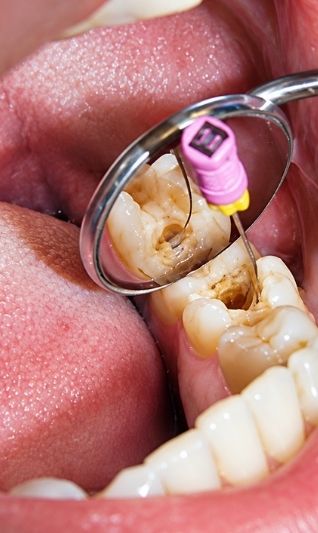
Some teeth with significant pulpal disease produce very obvious symptoms. Others are surprisingly quiet. A patient may describe only discomfort while chewing, prolonged sensitivity after drinking something cold, an occasional throbbing sensation, or a tooth that simply feels different from the neighbouring teeth.
A darkened tooth is another presentation that deserves assessment, particularly when there has been a previous injury.
The diagnosis comes from putting several pieces together: the history of the tooth, clinical examination, pulp testing, biting or percussion tests where indicated, and appropriate dental radiographs. Symptoms matter. They are not the whole diagnosis.
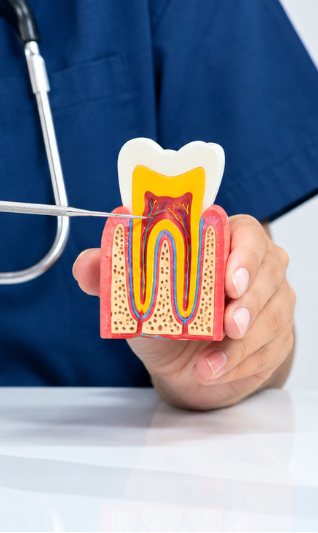
What Actually Determines Whether a Tooth Needs Root Canal Treatment?
Deep dental decay remains a common reason.
Once bacteria and their by-products reach the pulp, the tissue inside the tooth may no longer be capable of recovering predictably.
Previous dental work can also be part of the story. A tooth may have a large filling that has functioned for years before the pulp begins to deteriorate. The filling itself has not necessarily been unsuccessful. Sometimes there was simply very little healthy tooth structure separating the original cavity from the pulp.
Cracks require careful judgement.
A cracked tooth may remain treatable when the crack pattern and remaining tooth structure are favourable. In such cases, controlling the pulpal problem and subsequently protecting the tooth with an appropriate restoration can preserve a tooth that still has useful long-term function.
Trauma is different again. A front tooth injured during school years, sport, a fall or a road accident can change internally much later. There does not have to be a dramatic fracture for the pulp to have been affected. The American Association of Endodontists recognises deep decay, repeated dental procedures, cracks, chips and dental trauma among the established causes of pulpal inflammation or infection.
That is why a Root Canal Dentist in Calicut should be assessing the tooth rather than treating an X-ray or a symptom in isolation.
The question is not merely, “Can a root canal be done?”
The more useful question is, “Is this tooth worth preserving, and what does it need after the root canal to remain functional?”
Inside a Modern Root Canal Procedure
There is still a surprising amount of outdated anxiety surrounding root canal treatment.
Modern local anaesthesia changes the experience considerably. For most routine cases, the objective during treatment is quite ordinary: the patient should remain comfortable while the dentist works in a controlled field. The American Association of Endodontists describes contemporary root canal treatment as comparable in many respects to routine restorative dental procedures, while the NHS notes that local anaesthetic is normally used before treatment.
Once the tooth is adequately anaesthetised, access is made into the pulp chamber. The affected pulp tissue is removed and the root canals are identified.
This part demands precision.
Front teeth commonly have relatively straightforward canal anatomy. Premolars and molars can be considerably more intricate. A molar may contain several canals, curves, narrow areas and anatomical variations that cannot be approached casually.
The canals are cleaned, shaped and disinfected before being filled and sealed. A temporary restoration may be used when treatment is completed over more than one visit. In suitable cases, treatment may be completed in a single appointment; in others, two or more visits are entirely reasonable. The condition of the tooth, canal anatomy, existing infection and restorative plan influence that decision.
Patients sometimes become unnecessarily concerned when their treatment is scheduled across two appointments because they have heard that “modern root canals should always be finished in one sitting.”
I disagree with treating appointment count as a measure of quality.
The correct number of appointments is the number required to treat that particular tooth properly.
Why Preserving the Natural Tooth Matters
The greatest benefit of Root Canal Treatment in Eranhipalam, Calicut is not simply relief from dental pain. It is the possibility of retaining a natural tooth that can continue contributing to chewing, appearance, bite stability and normal oral function.
Natural teeth are remarkably efficient structures.
When endodontic treatment is appropriate, preserving the tooth avoids creating an unnecessary empty space that would otherwise require consideration of replacement options. The American Association of Endodontists identifies normal biting force, efficient chewing and maintenance of natural appearance among the practical benefits of saving teeth through endodontic treatment.
There is another practical benefit patients notice quickly.
They can stop organising daily life around one troublesome tooth.
No avoiding one side while eating. No testing every cup of tea cautiously. No wondering whether biting into something firm will trigger discomfort.
A well-treated and properly restored tooth should eventually become rather uninteresting.
That is a good outcome in dentistry.
Patients searching specifically for Root Canal Treatment in Calicut should pay attention to what happens after the canals have been treated as well. Endodontics and restoration are not separate conversations. A technically sound root canal placed inside a badly weakened tooth still needs an appropriate final restoration.
A posterior tooth that has lost considerable structure may require cuspal protection with a suitable crown or other definitive restoration. A smaller access cavity in a structurally strong anterior tooth may require a different restorative approach.
The final restoration should be decided from the tooth that is actually present, not from a standard package.
The Details After Treatment Matter More Than Patients Expect
A root canal removes the diseased or inflamed pulp; it does not make the remaining tooth structure indestructible.
For a few days after treatment, some tenderness around the tooth can occur, particularly when there was substantial inflammation before treatment. Modern guidance recognises this short period of post-treatment sensitivity, and most patients return to normal activities quickly.
The practical advice is simple.
Do not test the tooth unnecessarily while the local anaesthetic is still active.
People occasionally bite their cheek or lip because they cannot judge pressure properly. If a temporary filling has been placed, treat it as a temporary filling. Keep the area clean, attend the scheduled review, and complete the permanent restoration when advised.
One mistake is feeling comfortable after the root canal and postponing the crown or final restoration for months.
Comfort is not the same thing as completed treatment.
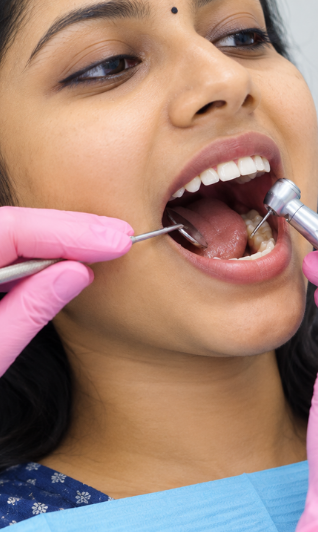
Another common mistake is assuming that a root-treated tooth never needs normal dental maintenance again. It still has surrounding gum, bone and supporting tissues. The remaining natural tooth structure can still require attention. Routine brushing, interdental cleaning and periodic dental examination remain relevant.
At Apothica Orthodontic Dental Clinic, root canal treatment is included among the clinic's general dental services. The clinic states that its approach uses modern techniques with treatment tailored to the individual patient, alongside its orthodontic and other dental services. Apothica is located at Rossa Building, Bypass Road, near the Passport Office, Eranhipalam, Calicut.
For someone looking for Root Canal Treatment in Eranhipalam, proximity has a practical advantage as well. Root canal care can involve diagnosis, active treatment and restorative follow-up. Being able to return conveniently for those appointments helps patients complete the entire treatment sequence rather than stopping once the tooth becomes comfortable.
Choosing Root Canal Treatment Around Eranhipalam
Good endodontic care starts before an instrument ever enters the tooth.
The dentist needs to know why the pulp has been affected, whether the tooth can be restored properly, what the root anatomy is likely to involve and what restoration will protect the tooth afterwards.
That assessment can be particularly valuable with previously filled teeth, molars, traumatised front teeth and teeth with extensive decay.
Root Canal Treatment in Eranhipalam, Calicut should be viewed as a tooth-preservation procedure rather than simply a pain procedure. Pain relief matters, certainly. The larger objective is to return a treatable natural tooth to useful function with a sound biological and restorative result.
The best cases are often the least dramatic afterwards.
The patient simply uses the tooth.
The Importance of Crown Placement After Root Canal Treatment
What happens after root canal treatment is just as important as the treatment inside the tooth. In many back teeth, particularly molars and premolars that have already lost significant tooth structure through decay, old fillings or the access required for treatment, placing an appropriate crown can be important for protecting the remaining tooth from fracture during normal chewing. Patients sometimes postpone this step because the tooth feels comfortable once the root canal is completed, but absence of pain does not mean the tooth has regained its original structural strength. The timing and type of final restoration should be decided according to how much healthy tooth remains, the position of the tooth and the forces it carries. Not every root-treated tooth automatically requires the same type of crown, but when cuspal protection is advised, completing it without unnecessary delay is an important part of giving the treated tooth the best chance of remaining functional over the long term.
FAQs
Why choose Root Canal Treatment in Eranhipalam, Calicut?
For patients living or working around Eranhipalam and nearby areas of Calicut, local access makes consultation, treatment and restorative follow-up easier to complete.
At Apothica Orthodontic Dental Clinic, root canal treatment is offered alongside comprehensive dental care, allowing the tooth to be considered as part of the patient's wider oral health rather than as an isolated procedure.
What are the benefits of root canal treatment?
The principal benefit is preservation of the natural tooth. Successful treatment can relieve symptoms associated with pulpal inflammation or infection while allowing the tooth to continue contributing to normal chewing, biting and appearance. Appropriate restoration after treatment helps protect that function.
My tooth has become dark. Can root canal treatment help me?
Possibly. A tooth can darken after trauma or when the pulp has lost vitality.
The tooth should first be examined and tested. If the pulp is non-vital or infected and the tooth is otherwise suitable for preservation, root canal treatment may form part of the treatment plan. Any remaining colour concern can then be assessed separately.
My tooth hurts when I chew. Is root canal treatment necessary?
Pain while chewing deserves an examination, but it does not automatically prove that a root canal is required.
Deep pulpal inflammation, infection, cracks and several other dental conditions can produce biting discomfort. Clinical testing and radiographs help identify the actual source. Severe pain while chewing or biting is recognised as a possible symptom associated with a tooth requiring endodontic assessment.
I have already had a filling, but my tooth still hurts. Could root canal treatment help me?
Yes, depending on the diagnosis.
A deeply restored tooth may have an inflamed pulp even when the filling itself appears satisfactory. Persistent or lingering symptoms after appropriate assessment can indicate that the tissue inside the tooth requires treatment. The existing restoration, remaining tooth structure and pulp condition all need to be reviewed before deciding.
What happens if an infected tooth is left untreated?
An infected pulp does not recover simply because symptoms temporarily become quieter. Infection may progress into the tissues around the root and can result in an abscess. Treating an appropriate tooth allows the infected internal tissue to be removed while preserving the natural tooth
How long does a root canal treatment take?
There is no useful universal number. Some treatments can be completed in one appointment; others require two or more visits.
Tooth type, canal anatomy, existing infection and overall complexity affect treatment time. The AAE notes that modern root canal treatment can often be completed in one or two appointments, while NHS guidance notes that some cases require two or more.
Can a molar tooth be treated with a root canal?
Yes. Molars are routinely treated endodontically.
They generally have more complex root canal anatomy than front teeth, so careful identification, cleaning, shaping and sealing of the canals are particularly relevant. A suitable final restoration is also an important part of returning the tooth to normal chewing function.
Can root canal treatment be done on a tooth with severe decay?
Often, yes, provided enough healthy tooth structure remains—or can predictably be restored—to support the final restoration.
Deep decay is itself one of the recognised reasons root canal treatment becomes necessary. The decisive issue is not simply how large the cavity looks. Restorability needs to be assessed before treatment begins.
Can root canal treatment be done on front teeth and back teeth?
Yes. Incisors, canines, premolars and molars can all receive root canal treatment when clinically indicated.
What changes is the anatomy. Front teeth frequently have simpler canal systems, while back teeth tend to have more roots and canals.
The principle remains the same: remove the affected pulp, disinfect and seal the canal system, then restore the tooth appropriately.
Meet Our Author

Dr. Sanooj V P, MDS (Orthodontist)
With over 10 years of experience in Orthodontics, Dr. Sanooj V. P. specialises in creating healthy, well-aligned smiles through personalised orthodontic care. His expertise includes braces, aligners and advanced orthodontic treatments, with a focus on comfortable and effective smile correction.
Contact
Apothica Orthodontic Dental Clinic,
Rossa Building Bypass Road, Near Passport Office, Eranhipalam, Calicut KL 673006
097466 04004
Working Hours
10 AM - 7PM (Sun - Sat)


© 2026 Apothica Orthodontic Dental Clinic. All rights reserved.
