
Orthodontic Treatment
Braces & Clear Aligners in Eranhipalam, Calicut
A patient can have reasonably straight front teeth and still have a poor bite. Another can have visibly crowded teeth but a bite that functions quite well. The photographs may look similar to an untrained eye; the orthodontic problems are not.
That distinction matters when considering Braces Treatment in Eranhipalam, Calicut.
Orthodontic treatment deals with the position of teeth, the way upper and lower teeth meet, the available space within the dental arches and, in some patients, the relationship between the jaws. Crowding is only one part of the picture. Protruding front teeth, gaps, deep bites, open bites, crossbites and uneven tooth contact can all change the treatment decision.
The NHS describes orthodontic treatment as being used both to align crooked, protruding or crowded teeth and to correct problems with the bite.
This is where patients sometimes make an early mistake: deciding which appliance they want before anyone has properly decided what needs correcting.
“I want clear aligners” is a preference.
“I have 5 mm crowding, a deep bite and an upper midline discrepancy” is a diagnosis.
The appliance comes afterwards.
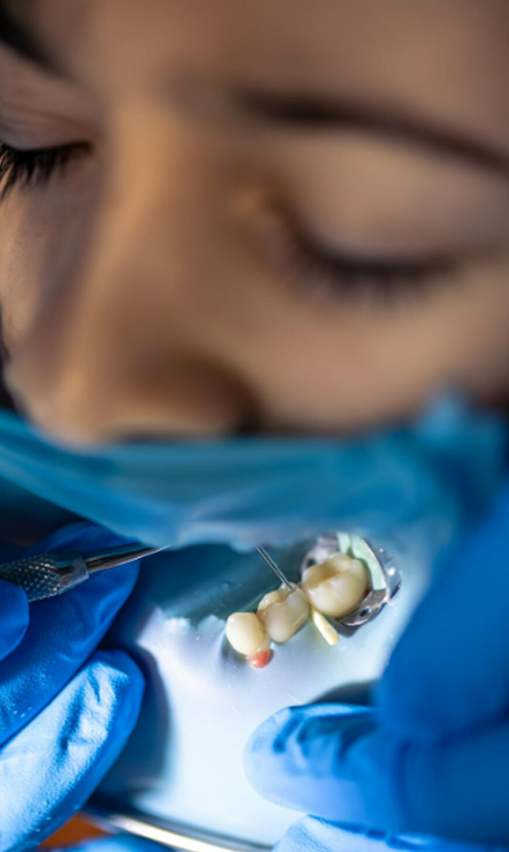
A proper orthodontic assessment may include examination of the teeth and gums, photographs, scans or impressions and radiographs when clinically required. Treatment planning should consider not merely where the front teeth should end up, but whether that movement can be achieved without creating an unstable bite or pushing teeth into an undesirable position.
Existing dental problems complicate matters. Active gum disease, untreated decay and poor oral hygiene should not simply be ignored because someone wants straighter teeth quickly. Orthodontic appliances make cleaning more demanding, particularly fixed braces, and treatment started in an unhealthy mouth can create avoidable problems. NHS guidance similarly notes that orthodontic treatment should not begin without a good standard of oral hygiene.
There is also a tendency to judge orthodontic treatment from the front six teeth alone.
Patients do it. Social-media photographs encourage it.
Orthodontists cannot.
A smile may look considerably straighter while the back teeth are still not contacting correctly. Closing a visible gap without controlling the roots can produce a result that looks acceptable temporarily but is less stable. Rotating a tooth into line is different from controlling its root position. Correcting a deep bite is different again.
This is why Teeth Braces Treatment in Eranhipalam, Calicut should not be approached as a cosmetic straightening package with a predetermined number of appointments.
Teeth move biologically, not digitally.
A simulation can show where a treatment plan intends to place them. It cannot guarantee that every tooth will respond at precisely the predicted speed.
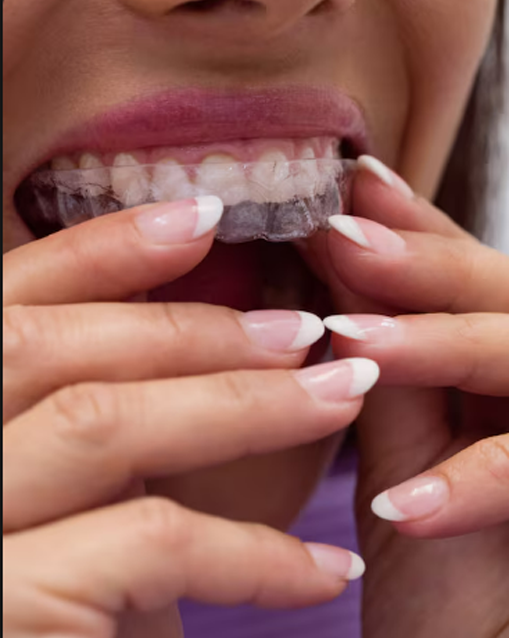
Braces or Clear Aligners?
The Decision Should Start With the Bite
Fixed braces remain remarkably useful because they give the clinician continuous control.
Brackets are attached to the teeth and connected by archwires. The patient cannot remove the appliance when it becomes inconvenient. That sounds like a disadvantage — and sometimes it is — but from a treatment-control perspective it can be valuable.
The appliance keeps working.
For significant rotations, complicated bite corrections, certain extraction cases and movements requiring close three-dimensional control of the teeth, fixed braces may be the more predictable option. That does not make braces automatically superior to aligners. It means appliance selection should follow the mechanics required for the particular case.
Metal Braces Treatment in Eranhipalam remains relevant for exactly this reason. Metal braces are visible, but visibility is not the same thing as poor treatment. A smaller-looking or more fashionable appliance does not automatically move teeth better.
Clear aligners use a different system. A sequence of closely fitting plastic trays applies controlled forces to selected teeth. The British Orthodontic Society describes them as clear, flexible appliances used sequentially to move teeth incrementally.
They can be very effective.
They can also fail surprisingly well when worn badly.
The usual problem is not the plastic. It is the patient.
An aligner sitting in its box for five hours cannot move a tooth.
Patients sometimes remove aligners for tea, coffee, snacks, meetings, photographs, travel and social occasions, then mentally count that as full-time wear. By the end of the day the trays may have been outside the mouth far longer than intended.
That matters because predictable aligner treatment depends heavily on compliance. Guidance from the American Association of Orthodontists notes that aligners are generally worn for most of the day and removed for eating, drinking and oral hygiene.
For a disciplined adult, that removability can be excellent.
For a teenager who repeatedly loses trays, forgets them at school or dislikes putting them back after meals, fixed braces may be far less troublesome.
This is the part rarely appreciated when patients compare Clear Aligners in Eranhipalam, Calicut with braces purely on appearance.
The “best” appliance is sometimes the one the patient will actually use properly for the next year.
Living With Braces Is More About Maintenance Than Pain
Patients often ask first about pain.
Cleaning deserves the longer conversation.
Fixed braces create small areas around brackets, wires and gum margins where plaque and food debris collect easily. Brushing the visible surface of a front tooth while leaving plaque around the bracket is not good orthodontic hygiene.
White marks around brackets can remain after the brace is removed. Gingival inflammation is also common when cleaning deteriorates. NHS guidance identifies plaque accumulation, white spots and gum problems as recognised concerns during orthodontic treatment.
The frustrating part is that the braces may have worked perfectly.
The teeth can be straight and still look disappointing because the enamel or gums were neglected during treatment.
Interdental brushes are useful around wires. Patients who already struggle with routine brushing need to be particularly realistic before committing to fixed appliances.
Food habits need adjustment rather than unnecessary panic.
Eating normal meals is possible. Biting directly into very hard food, chewing ice, repeatedly eating sticky sweets or treating brackets as indestructible is less sensible. A broken bracket does not necessarily ruin treatment, but repeated breakages can interrupt mechanics and extend the process.
Then there are elastics.
A patient may attend every appointment and still make little progress with a bite correction if prescribed elastics are worn occasionally rather than as instructed. Sometimes the brace is blamed because “nothing is changing”. The missing element is sitting unused in a packet at home.
Temporary tenderness after fitting or adjustments is expected. It usually settles. Severe persistent pain, swelling, trauma from a broken component or a wire causing significant injury deserves clinical attention rather than weeks of tolerance.
Patients considering Braces Treatment in Eranhipalam, Calicut should also think about something much less glamorous: appointments.
Orthodontics is not a fit-it-and-forget-it procedure.
Reviews matter. A patient working in another city or living abroad should discuss travel before starting. Repeatedly missing appointments because the clinic is inconvenient can become more significant than whether the original appliance cost slightly more or less.
Convenience is part of orthodontic planning.
Clear Aligners Are Discreet, Not Effortless
Clear aligners have changed adult orthodontics considerably because they remove one of the strongest barriers to treatment: visible fixed braces.
For professionals meeting clients daily, people appearing regularly on camera, adults returning to orthodontic treatment after relapse and patients preparing for major personal events, this can make treatment much easier to accept.
They are removable for eating.
Cleaning the teeth is generally less complicated than cleaning around brackets and wires.
They are less noticeable in ordinary conversation.
Those are genuine advantages. The mistake is stretching those advantages into the claim that aligners are suitable for everybody.
They are not.
The British Orthodontic Society notes that clear aligners are particularly associated with correction of mild to moderate orthodontic problems, although aligner systems and treatment techniques continue to develop. More complex cases can sometimes be treated with aligners, but complexity demands careful case selection, planning and patient cooperation.
Attachments may be bonded to certain teeth. These small tooth-coloured shapes help the aligner grip teeth and deliver particular movements. Patients expecting absolutely nothing to be visible should know about them before treatment starts.
Elastics may still be necessary.
Extra aligners — often called refinements — may be required if some teeth do not track as planned.
A patient may finish the first series of trays and not actually be finished.
That is not automatically evidence of poor treatment. Teeth are biological structures surrounded by periodontal tissues and bone. Digital treatment plans are useful, but mouths do not behave like animated models.
There are practical irritations too. Aligners need somewhere clean to be stored during meals. Wrapping them in tissue at a restaurant is an excellent way of having them thrown away. Hot water can distort some plastics. Putting trays back over teeth covered in food debris for hours is not a clever compromise.
Removable does not mean casual.
Patients frequently ask whether they can leave aligners out for a wedding, presentation or family function. Short planned interruptions may sometimes be manageable depending on the clinician's instructions, but repeated “special occasions” eventually become an orthodontic wear problem.
The attraction of aligners is freedom.
The treatment still needs discipline.
Treatment Time, Bite Correction and the Part Patients Forget: Retainers
There is no serious way to look at somebody's smile for thirty seconds and promise an exact treatment duration.
Simple alignment may be relatively quick. Significant crowding, difficult rotations, extraction-space closure or complicated bite correction takes longer. NHS information describes orthodontic treatment commonly extending across many months and, depending on complexity, sometimes beyond two years.
The calendar alone is not the issue.
Quality of movement matters.
Trying to complete treatment for a wedding in four months when the actual orthodontic problem needs substantially longer can lead to the wrong objective. If a wedding is approaching, tell the orthodontist the exact date at the first consultation. Sometimes meaningful cosmetic improvement can be achieved before the event while comprehensive correction continues later. Sometimes aligners can be removed briefly for the ceremony or photographs under professional guidance. Sometimes starting treatment immediately before the event creates more inconvenience than benefit.
Case dependent.
The same caution applies when comparing advertised treatment times.
“Six-month braces” may describe treatment concentrating mainly on visible alignment in selected cases. That is different from saying every bite problem can be comprehensively corrected in six months.
Patients seeking Braces Treatment in Eranhipalam, Calicut should ask a better question than “How fast can you finish?”
Ask what will and will not be corrected within the proposed treatment period.
Then ask about retention.
Teeth do not become permanently fixed in their new position simply because the braces have been removed or the final aligner has been completed. Retainers are used to reduce relapse while tissues reorganise, and some degree of tooth movement can occur throughout life. NHS and British Orthodontic Society guidance both emphasise retention after orthodontic treatment.
This is where expensive orthodontic treatment can unravel quietly.
A patient wears retainers carefully for three months, begins missing nights, then stops altogether because the teeth “feel stable”. A year later, a lower incisor has shifted. Two years later, the retainers no longer fit.
The braces did not suddenly stop working after removal.
Retention stopped.
Adults with previous orthodontic treatment often arrive for Braces Treatment in Eranhipalam, Calicut because of precisely this type of relapse. Sometimes the second treatment is straightforward. Sometimes considerable movement has occurred and the process is almost starting again.
FAQs
What is the difference between braces and clear aligners?
Fixed braces use brackets and wires attached to the teeth, so treatment continues without depending on the patient remembering to put the appliance back in.
Clear aligners are removable trays changed sequentially during treatment. They are considerably less visible and convenient for meals and cleaning, but the patient must wear them consistently.
Neither system is automatically better. Complex tooth movements or bite problems may sometimes be handled more predictably with braces, while suitable aligner cases can achieve excellent results with considerably less visible hardware.
What Are the Benefits of Clear Aligners and Invisible Aligners?
Their biggest practical advantages are appearance, removability and easier access for brushing and flossing.
There are no brackets or wires across the front of the teeth. Aligners can be removed during meals, and adults frequently find them easier to integrate into professional life.
The compromise is responsibility. Losing trays, leaving them out for long periods or changing to the next aligner before the teeth are ready can interfere with treatment.
Can braces or aligners fix gaps between teeth?
Often, yes.
The more useful question is why the gap exists. A straightforward spacing problem is different from a gap associated with missing teeth, unusually small teeth, gum conditions or differences in the size and relationship of the jaws.
Closing a space is only worthwhile when the final tooth positions and bite make sense.
Can braces or aligners fix an uneven bite?
They can correct a wide range of bite problems, including certain overbites, crossbites, open bites and underbites.
Not every bite problem is purely dental. Significant skeletal jaw discrepancies may require different treatment planning and, in selected severe adult cases, orthodontics may form part of treatment involving jaw surgery.
Can braces or aligners improve my smile before a wedding or special event?
Possibly, but treatment should be planned around the actual date rather than an optimistic deadline.
Minor alignment may improve noticeably within months. Comprehensive bite correction can require considerably longer. Patients with a wedding approaching should mention the date before treatment begins.
Do not shorten proper treatment merely to fit a photography schedule.
What is Braces Treatment in Calicut?
Braces treatment is orthodontic treatment in which controlled forces are applied to move teeth towards planned positions and, where required, improve the way the upper and lower teeth meet.
Treatment can involve metal braces, ceramic braces or other orthodontic appliances depending on the diagnosis.
The relevant question is not simply whether braces are available in Calicut. It is whether the treatment plan addresses the patient's actual alignment and bite problem.
Can adults choose braces or aligners?
Yes. Orthodontic treatment can be carried out in adults, provided dental and periodontal conditions are suitable.
Adult cases sometimes require more coordination with general dentists, periodontists or restorative dentists because crowns, missing teeth, gum recession, implants or previous dental work may already be present.
Age alone is rarely the decisive problem.
How long does braces or aligner treatment take?
It depends heavily on what is being corrected.
A relatively minor alignment problem may take considerably less time than an extraction case, severe crowding or substantial bite correction. Orthodontic treatment commonly runs from several months to two years or longer depending on complexity.
Missed appointments, broken appliances and poor aligner or elastic wear can extend it.
Are clear aligners easy to remove?
Yes. They are specifically designed to be removable.
That convenience should not be mistaken for permission to remove them repeatedly throughout the day. They normally need to remain in the mouth for most of the day, apart from eating, drinking as advised and oral hygiene.
Patients who know they will struggle with that routine should say so before choosing aligners.
Can braces improve my smile?
Usually, when tooth position is responsible for the problem.
Braces can align crooked teeth, close appropriate spaces, manage crowding and improve certain bite relationships. The visible improvement can be considerable.
They cannot solve every aesthetic concern. Tooth colour, tooth shape, gum levels, damaged enamel, missing teeth and facial proportions may require different dental treatment.
A technically successful orthodontic result is not simply six straight front teeth.
The bite has to live there too.
Achieve Your Perfect Smile
From virtually invisible clear aligners to highly precise fixed braces, we offer customized straightening solutions designed for your lifestyle and goals.
Contact
Apothica Orthodontic Dental Clinic,
Rossa Building Bypass Road, Near Passport Office, Eranhipalam, Calicut KL 673006
097466 04004
Working Hours
10 AM - 7PM (Sun - Sat)


© 2026 Apothica Orthodontic Dental Clinic. All rights reserved.
